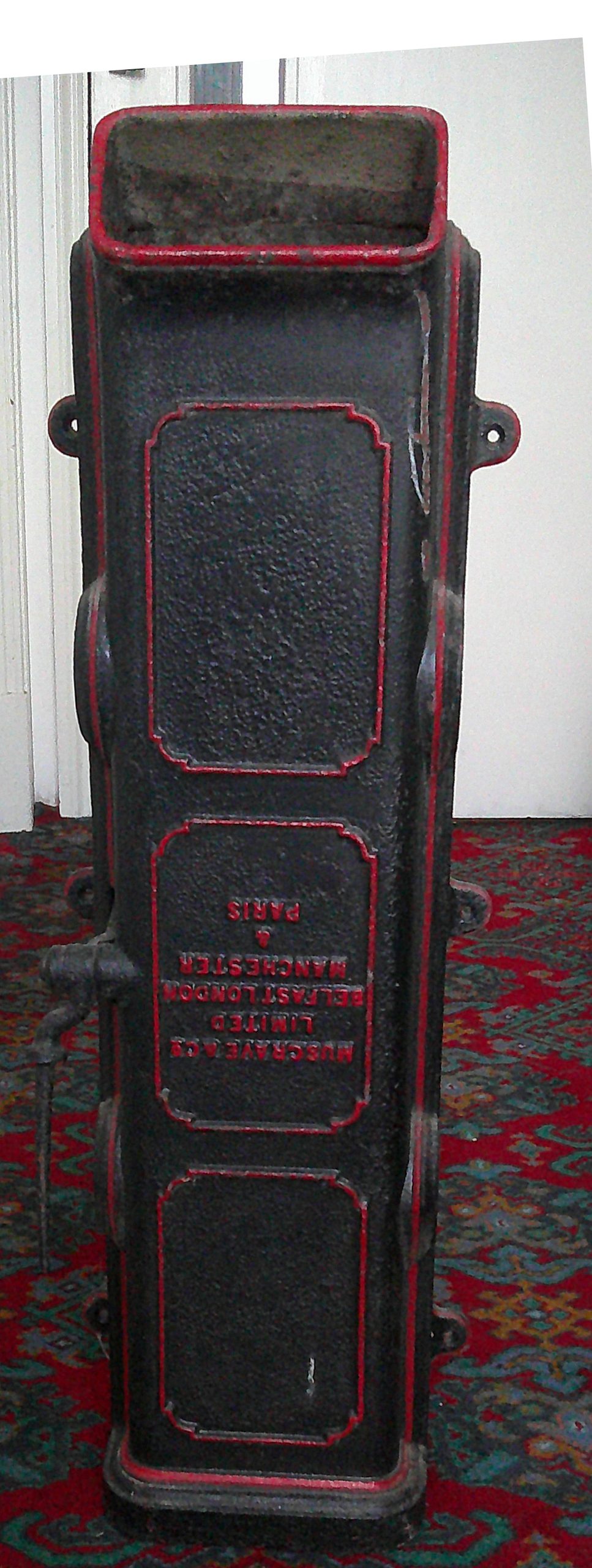
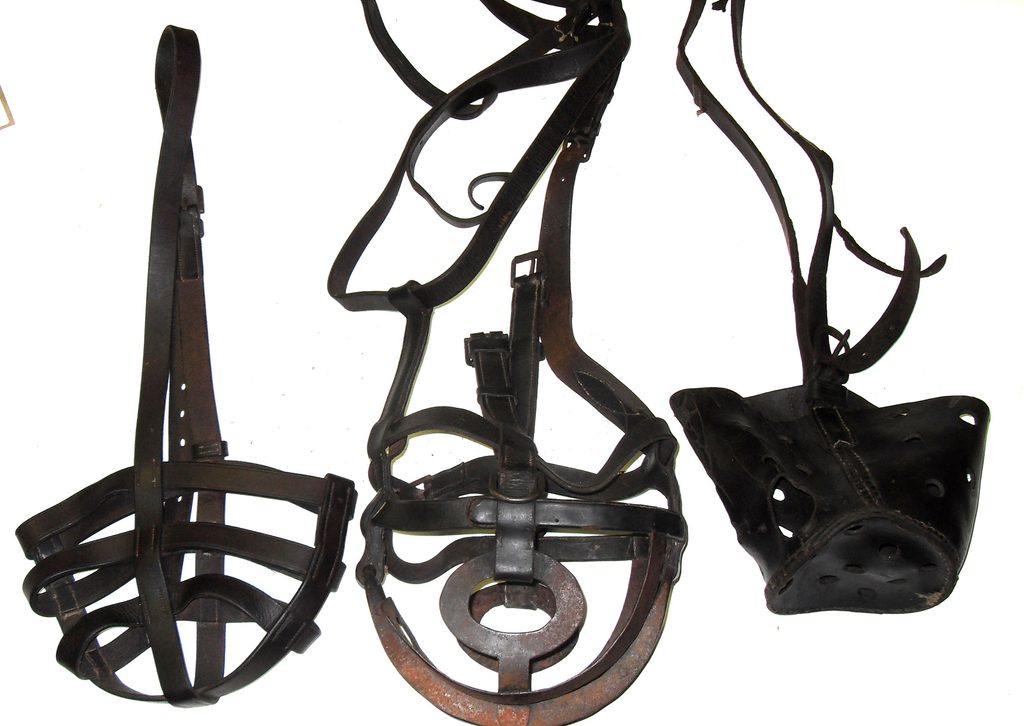
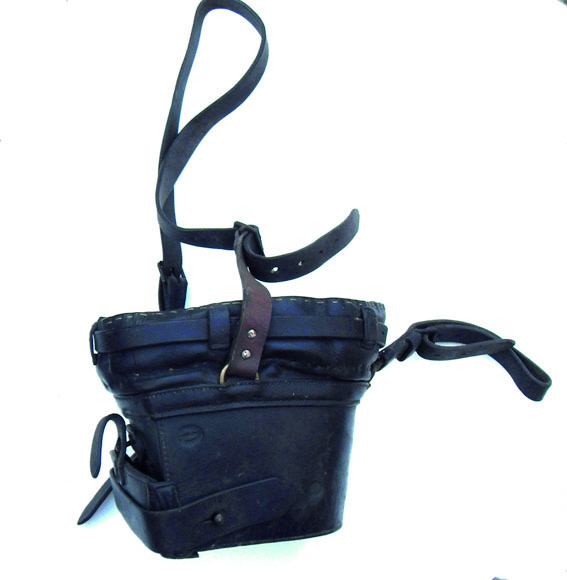
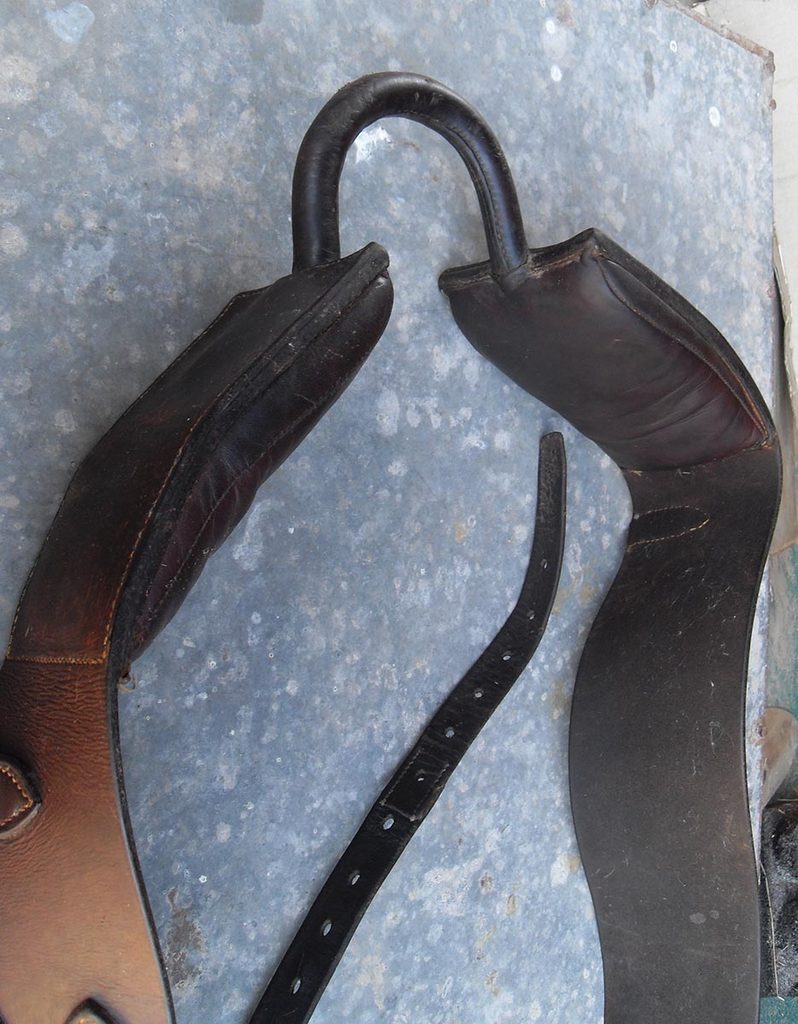
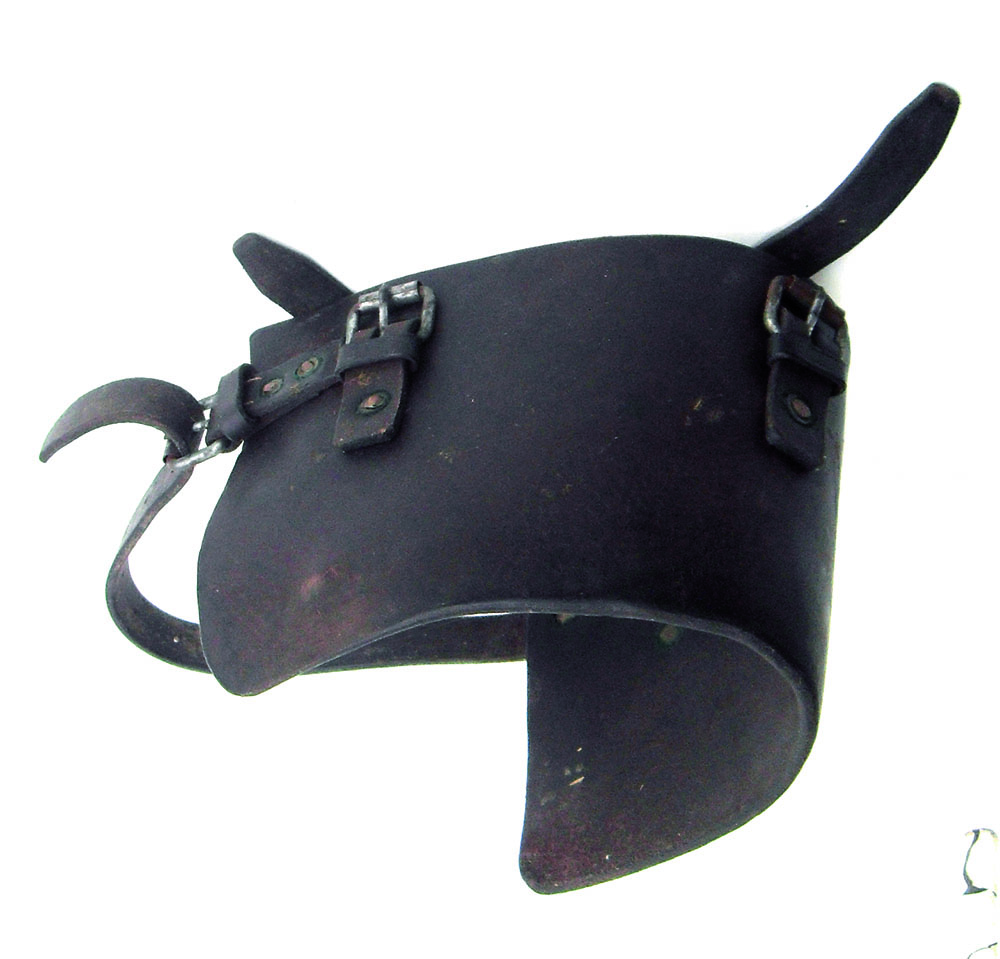
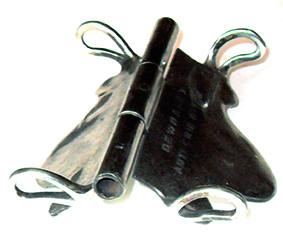
A Musgrave’s automatic feeder. (upside down) A very heavy piece of cast iron equipment that would have been used in large stables with lots of horses to feed. It would have been situated above the feed room, probably in the loft where it could drop the feed into buckets below. A handle allows the measured amount for each horseMuzzles were used for a variety of reasons. The first was to prevent it biting another horse or its rugs. The central one is a grazing muzzle to prevent a laminitic horse taking too much grass. A far better design than the modern ones. The third could be for giving the horse a small feed while out working.An anaesthetic mask used in the days before injections. The tray in the bottom of the mask pulled out so you could put a wad of cotton wool in with Chloroform on it. Before doing this the horse had to be thrown because Chloroform has different effects on different animals and people, and he may well have staggered and fallen on the handler. This method was used until the 1950s.An anti-cast roller. A horse can roll in its stable and jam its legs between its body and the wall of the stable, making it very difficult to get him up. This is called ‘being cast’. If this happens, he can get hurt. In the old days, if a horse did this, or even if it didn’t, it was thought to be sensible to put a roller on him with a big iron arch over the top to prevent him rolling over and getting cast. The problem with this was that the weight of the iron roller on the horse’s back many hours a day was not good for the horse. It is also a very stupid horse that doesn’t learn from the first frightening experience, and few will get cast again! Not many are used today.A Bib was useful if a horse had an injury you wanted to prevent him from biting. This was strapped to his head collar under the chin and stopped him from interfering!Body Brushes for grooming the horse were beautifully made with leather backs and real bristles. The leather back was soft if you accidentally knocked the horse, and, like this one, they were often beautifully decorated with repousse images.
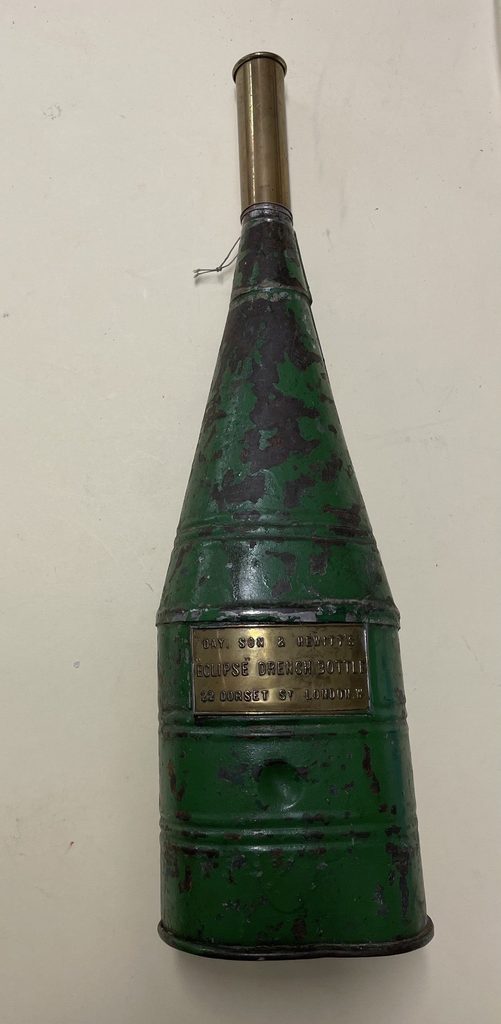
A Drenching bottle for administering a dose of medicine. The owner or head groom did much doctoring.
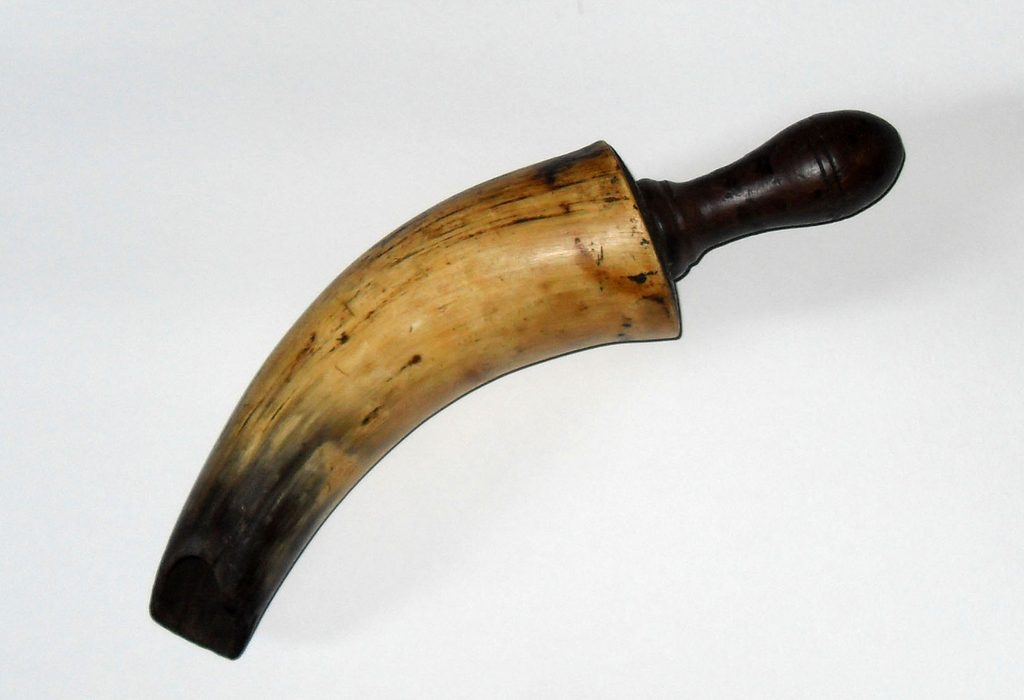
Another tool for giving a horse a dose of medicine, a Drenching Horn.
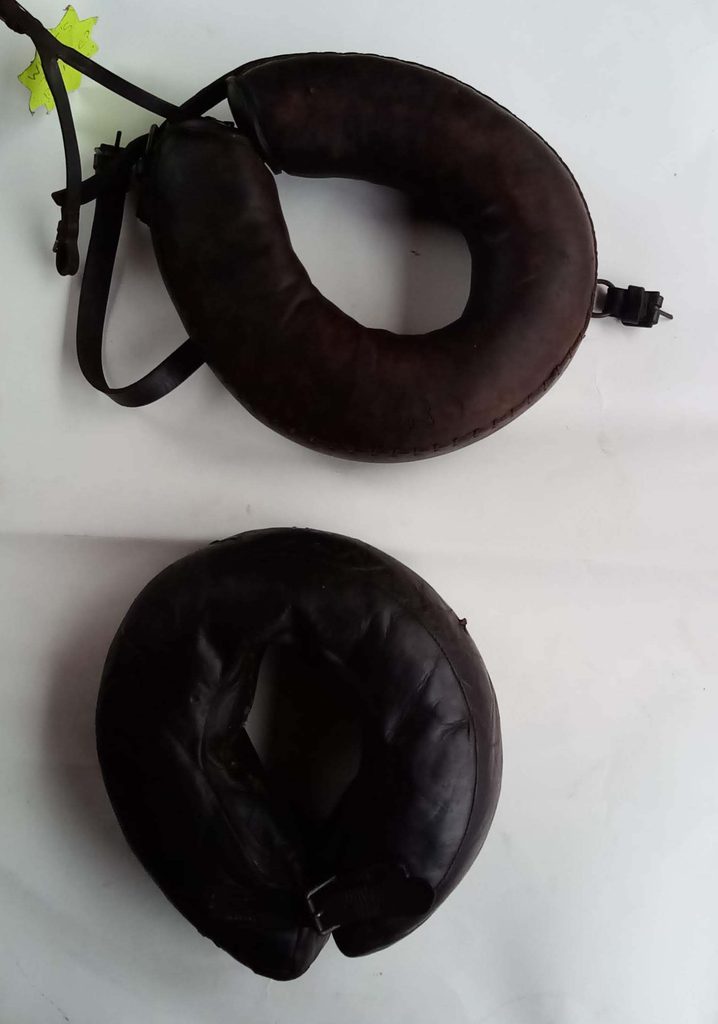
Large sausage boots to use on horses that tend to lie on their heels, so damaging their elbows. This happened with large work horses living in stalls where room was limited. These boots are so thick that fixed around the fetlock they kept the hoof and shoe from doing any damage to the horse.
Anti Crring device. Cribbing is when a horse bites on anything it can get its teeth around and can destroy wooden doors and walls in no time. It can also lead to wind sucking. It was believed both were vices. It is now understood that it is generally due to pain, mostly caused by stomach ulcers. This cruel device hun in the mouth preventing the horse from closing the mouth! Stainless steel, Early 20thC.
There are lots more interesting items in the collection. Do come and see them!
We use cookies on our website to give you the most relevant experience by remembering your preferences and repeat visits. By clicking “Accept All”, you consent to the use of ALL the cookies. However, you may visit "Cookie Settings" to provide a controlled consent.
This website uses cookies to improve your experience while you navigate through the website. Out of these, the cookies that are categorized as necessary are stored on your browser as they are essential for the working of basic functionalities of the website. We also use third-party cookies that help us analyze and understand how you use this website. These cookies will be stored in your browser only with your consent. You also have the option to opt-out of these cookies. But opting out of some of these cookies may affect your browsing experience.
Necessary cookies are absolutely essential for the website to function properly. These cookies ensure basic functionalities and security features of the website, anonymously.
Cookie
Duration
Description
cookielawinfo-checkbox-analytics
11 months
This cookie is set by GDPR Cookie Consent plugin. The cookie is used to store the user consent for the cookies in the category "Analytics".
cookielawinfo-checkbox-functional
11 months
The cookie is set by GDPR cookie consent to record the user consent for the cookies in the category "Functional".
cookielawinfo-checkbox-necessary
11 months
This cookie is set by GDPR Cookie Consent plugin. The cookies is used to store the user consent for the cookies in the category "Necessary".
cookielawinfo-checkbox-others
11 months
This cookie is set by GDPR Cookie Consent plugin. The cookie is used to store the user consent for the cookies in the category "Other.
cookielawinfo-checkbox-performance
11 months
This cookie is set by GDPR Cookie Consent plugin. The cookie is used to store the user consent for the cookies in the category "Performance".
viewed_cookie_policy
11 months
The cookie is set by the GDPR Cookie Consent plugin and is used to store whether or not user has consented to the use of cookies. It does not store any personal data.
Functional cookies help to perform certain functionalities like sharing the content of the website on social media platforms, collect feedbacks, and other third-party features.
Performance cookies are used to understand and analyze the key performance indexes of the website which helps in delivering a better user experience for the visitors.
Analytical cookies are used to understand how visitors interact with the website. These cookies help provide information on metrics the number of visitors, bounce rate, traffic source, etc.
Advertisement cookies are used to provide visitors with relevant ads and marketing campaigns. These cookies track visitors across websites and collect information to provide customized ads.